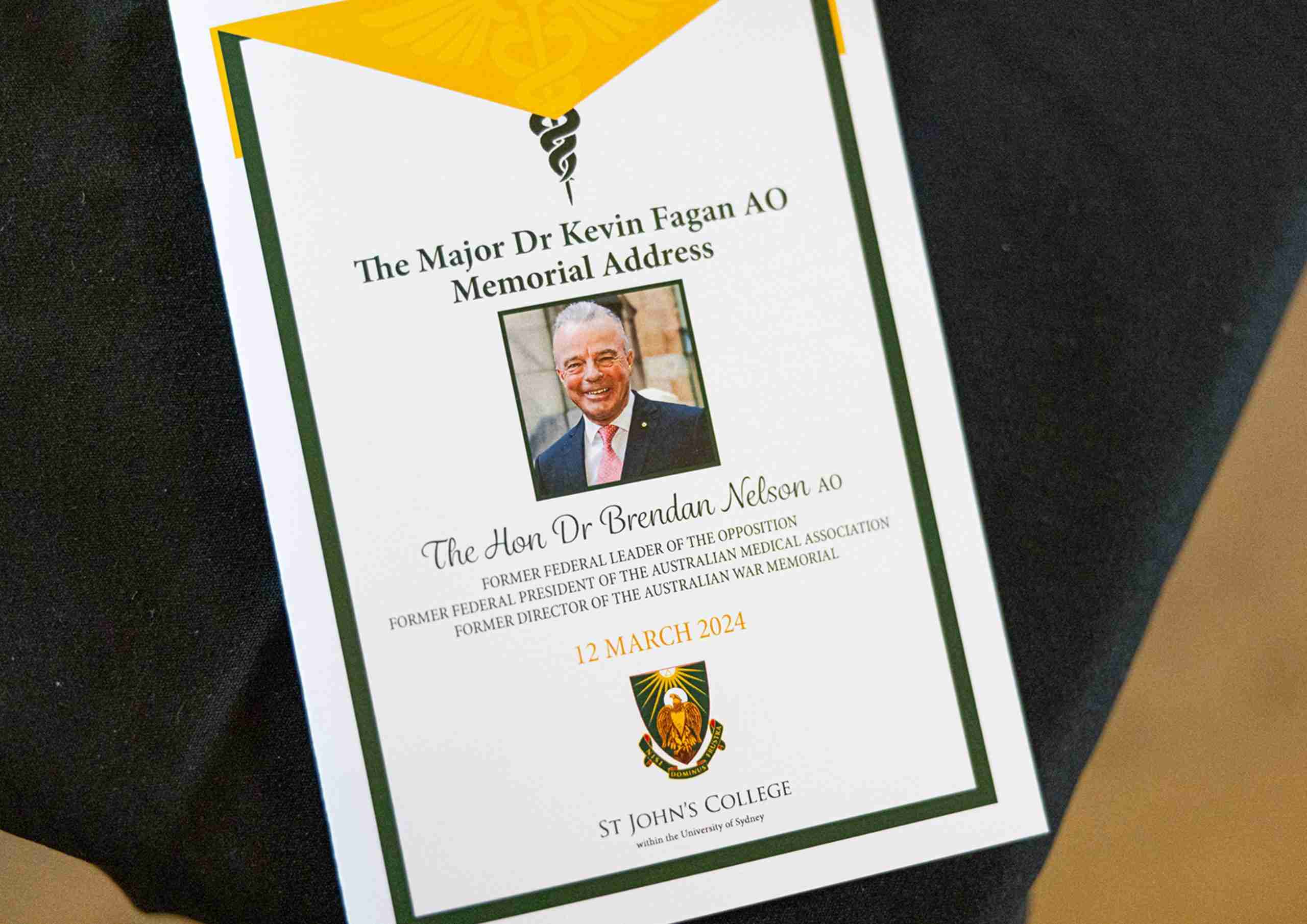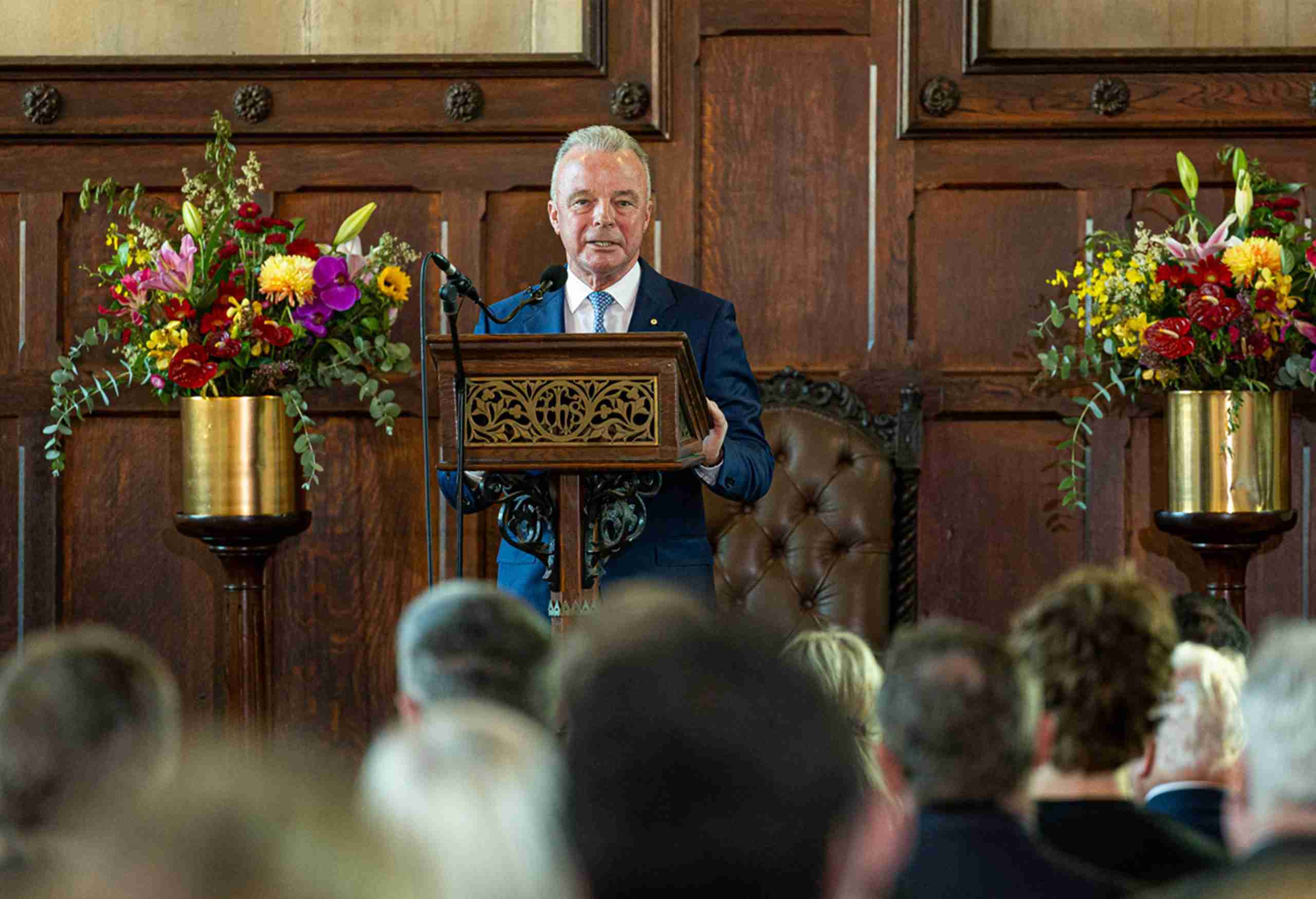
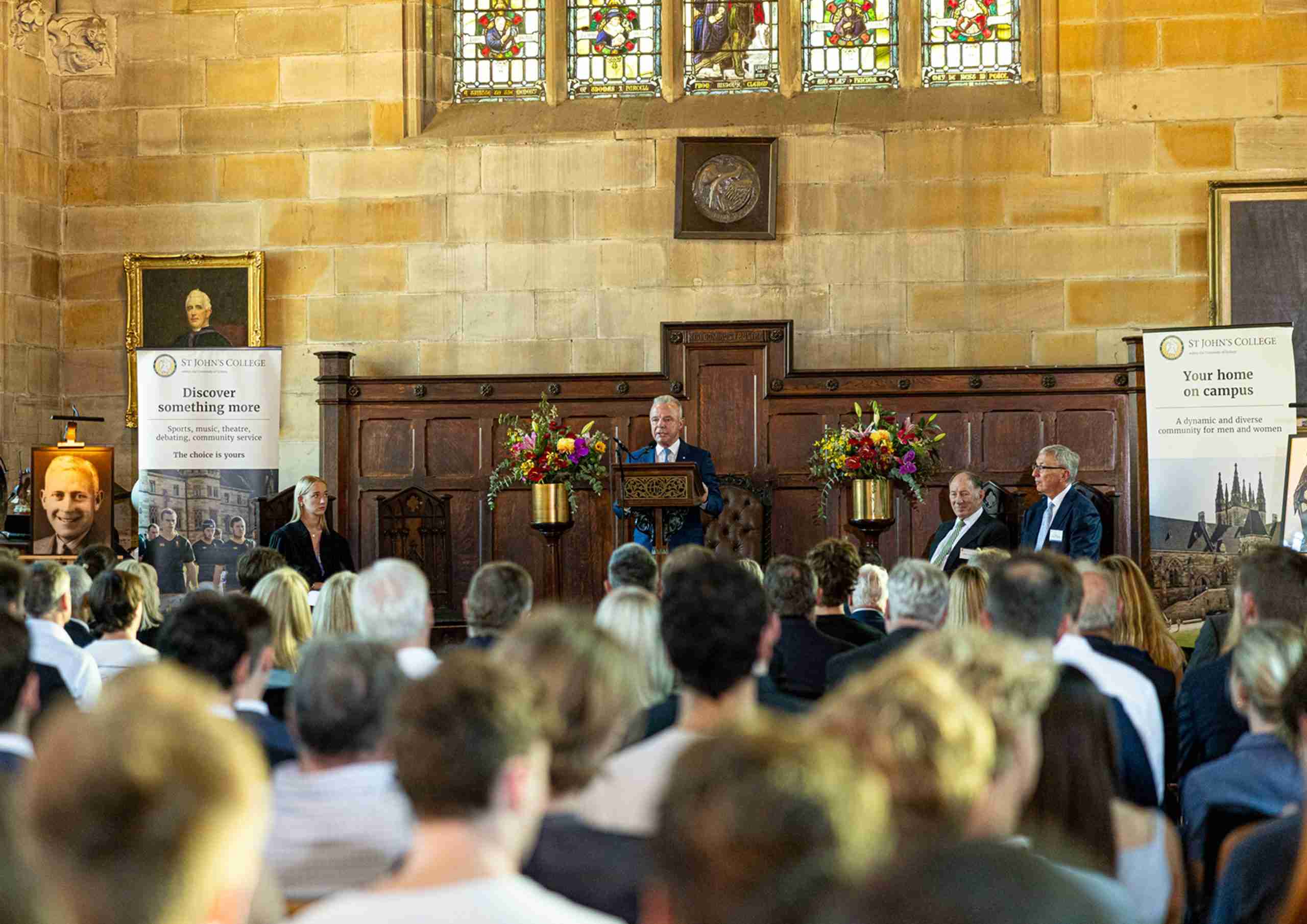
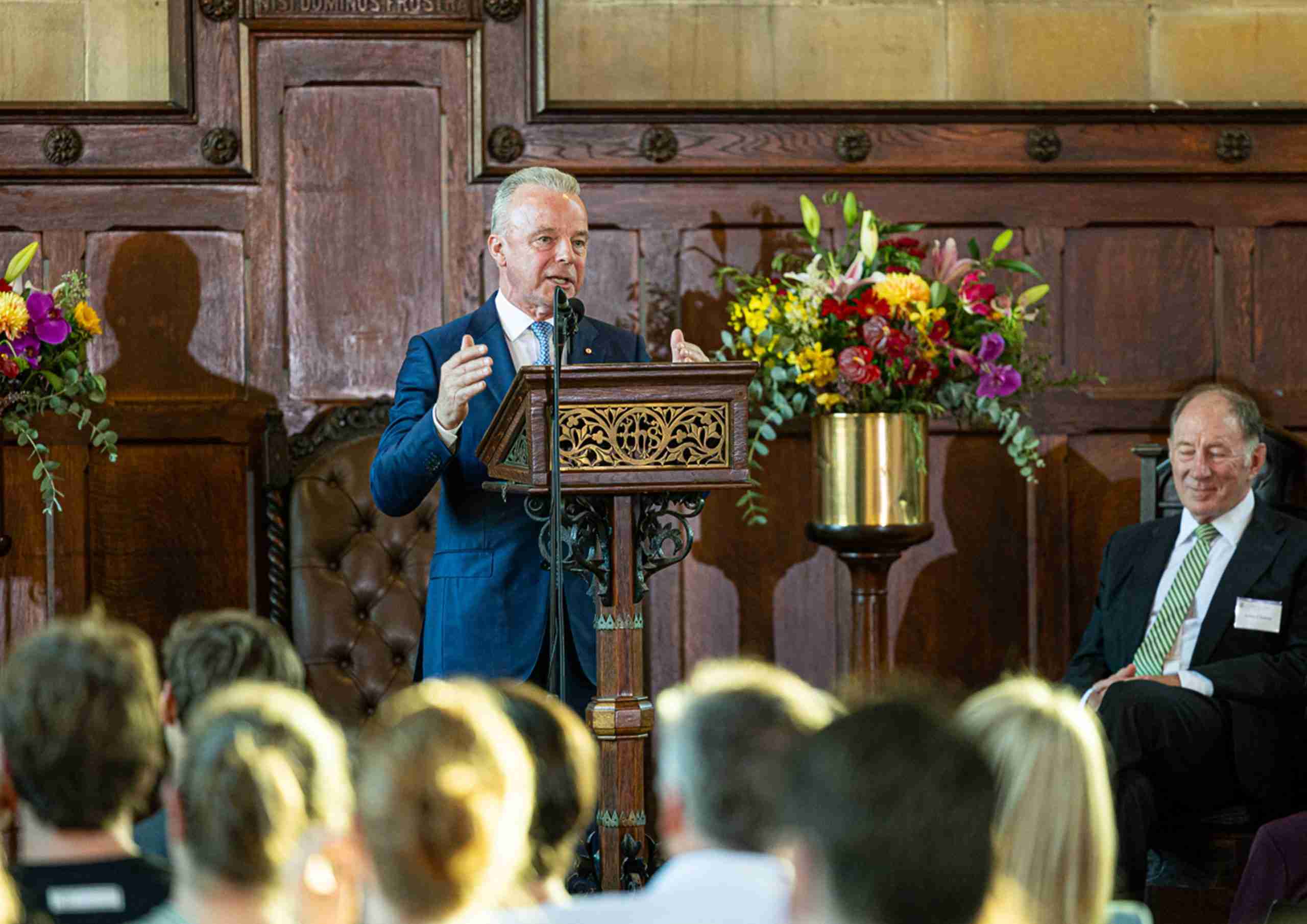
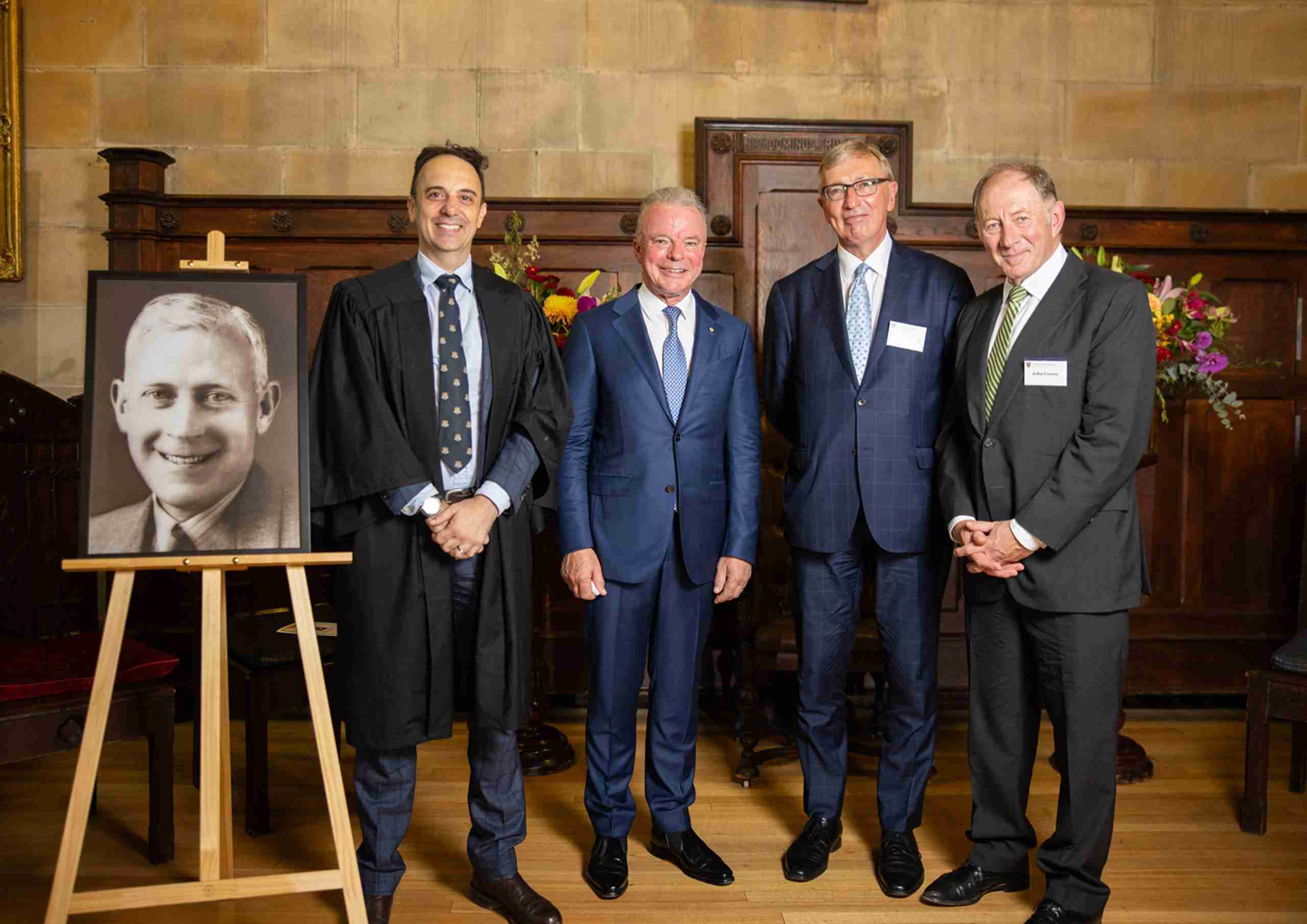
The Second Annual Major Dr Kevin Fagan Memorial Lecture was delivered by the Honourable Dr Brendan Nelson AO, former Federal Leader of the Opposition, former Federal President of the Australian Medical Association, and former Director of the Australian War Memorial. Dr Nelson is one of Australia's most well-regarded orators, possessing a breadth of knowledge that spans various disciplines, ranging from military affairs to medicine. His expertise stems from a blend of public and private sector experiences, making him a highly respected authority in both arenas.
The annual lecture is dedicated to exploring ethical quandaries, encompassing a wide range of topics such as bioethics, military ethics, and historical dilemmas. Dr Kevin Fagan, a celebrated alumnus of St John’s College, served as a doctor on the Burma–Thailand railway during 1943 while enduring the hardships of being a prisoner of war under Japanese captivity. He was beloved by his men for his leadership and talent even in those horrific times. His experiences and insights serve as a poignant reminder of the ethical challenges faced in extraordinary circumstances.
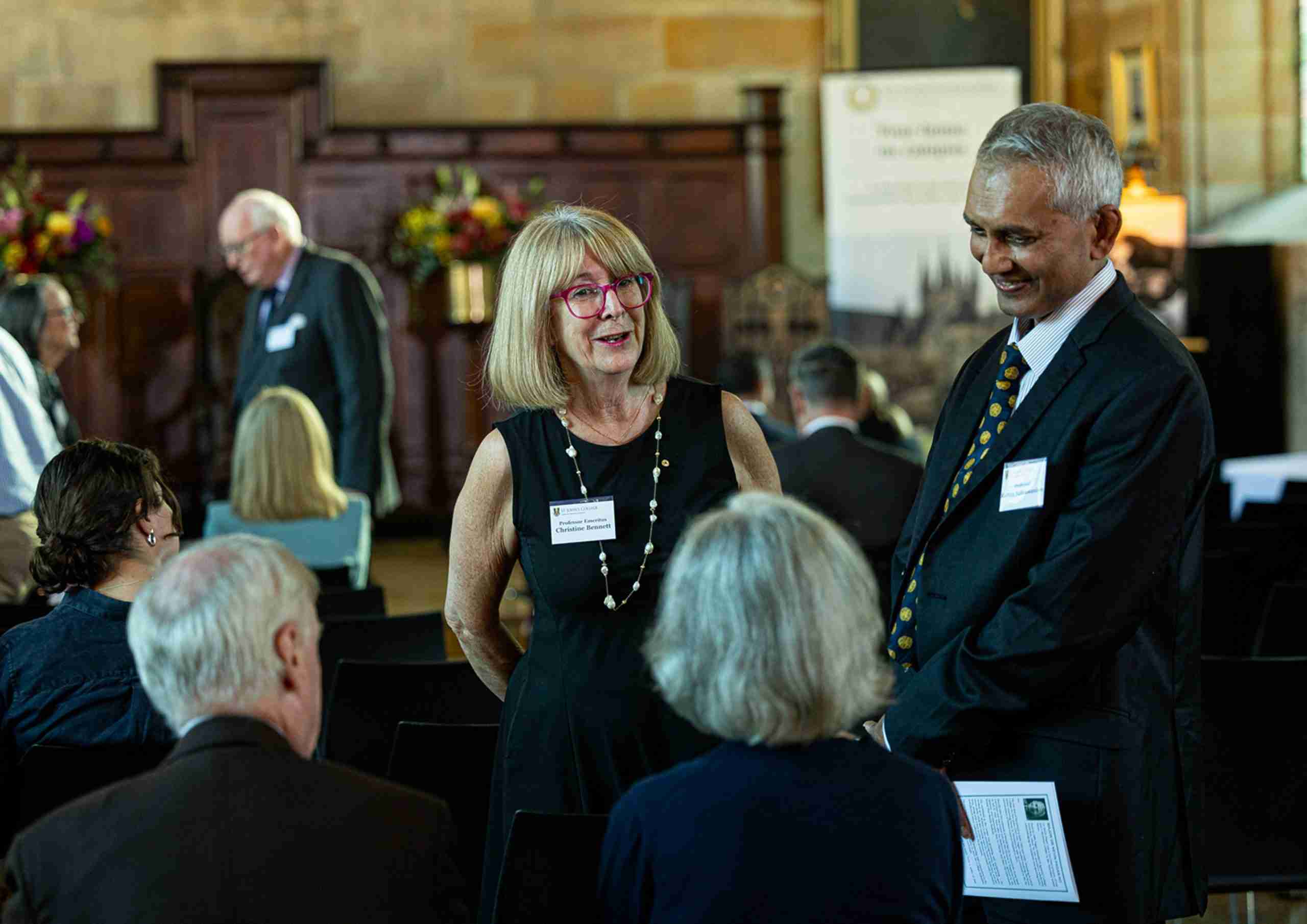
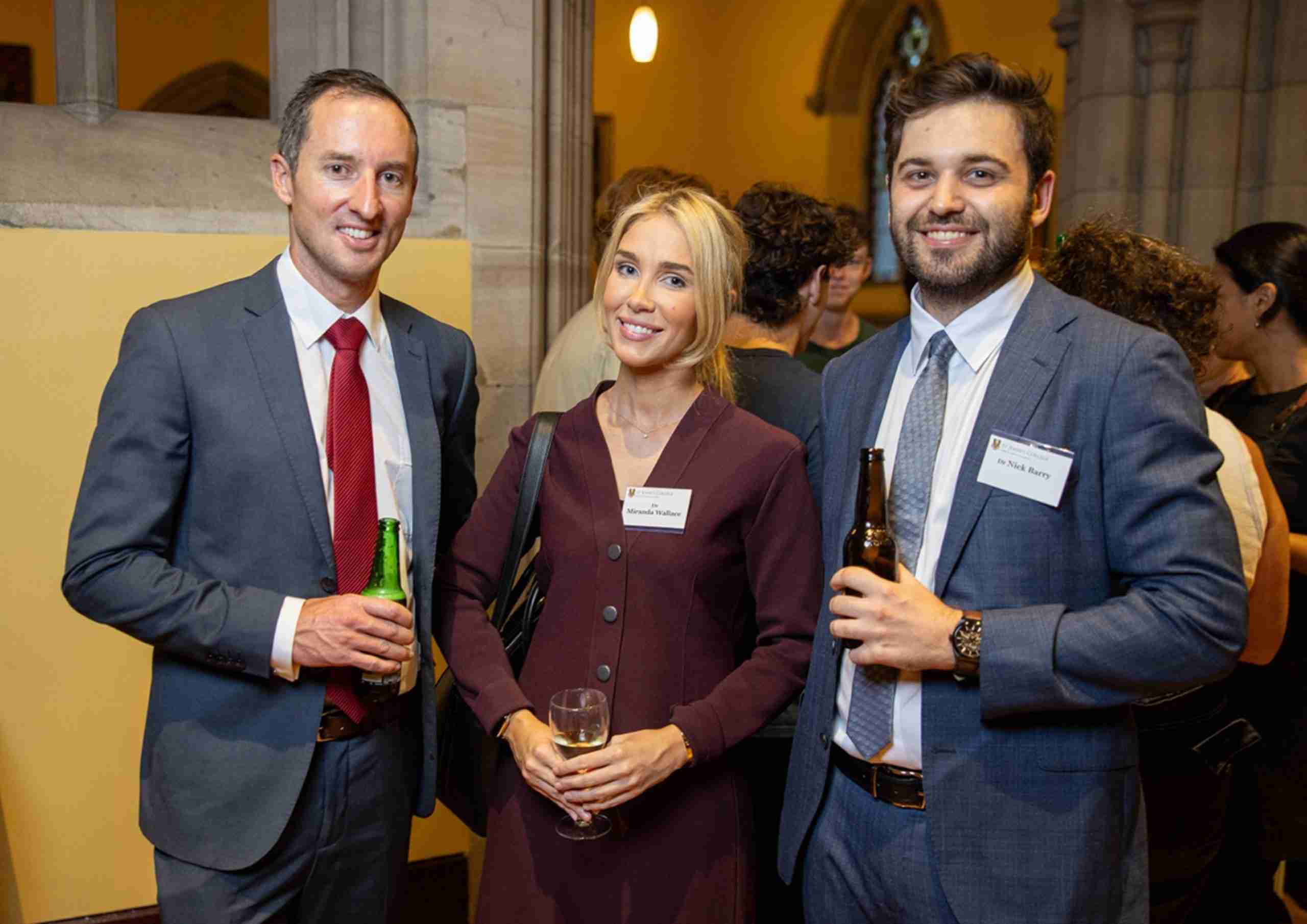
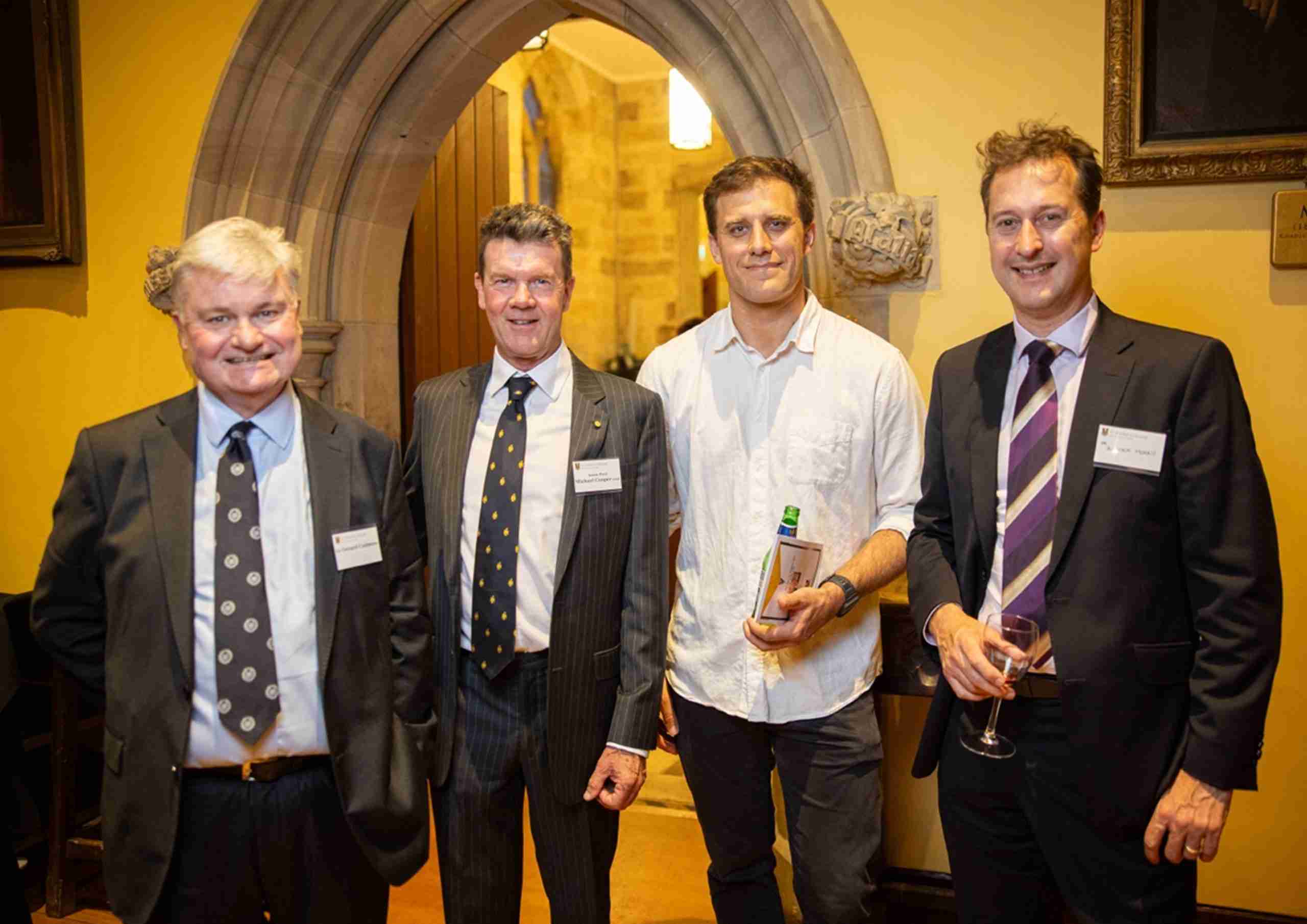
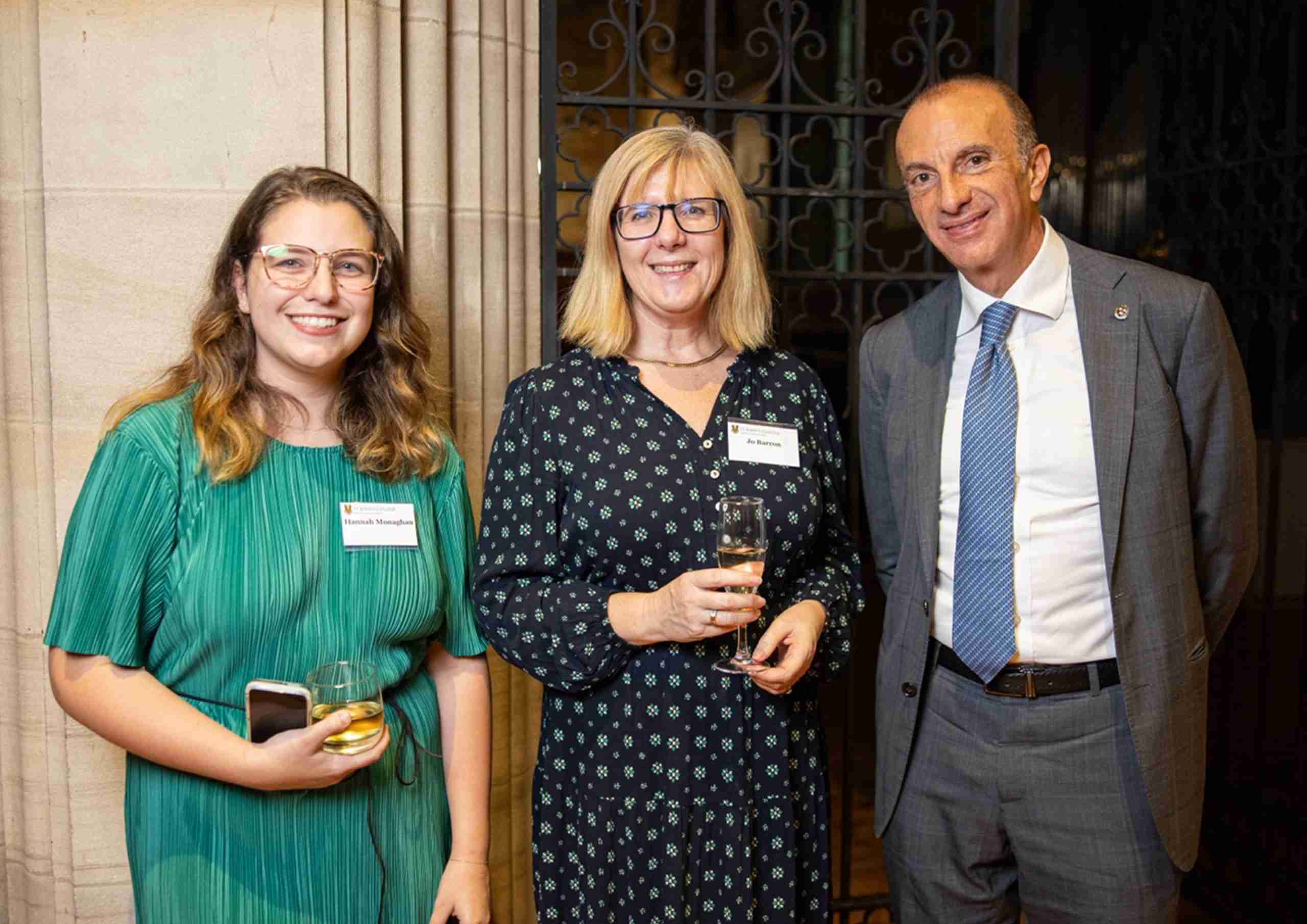
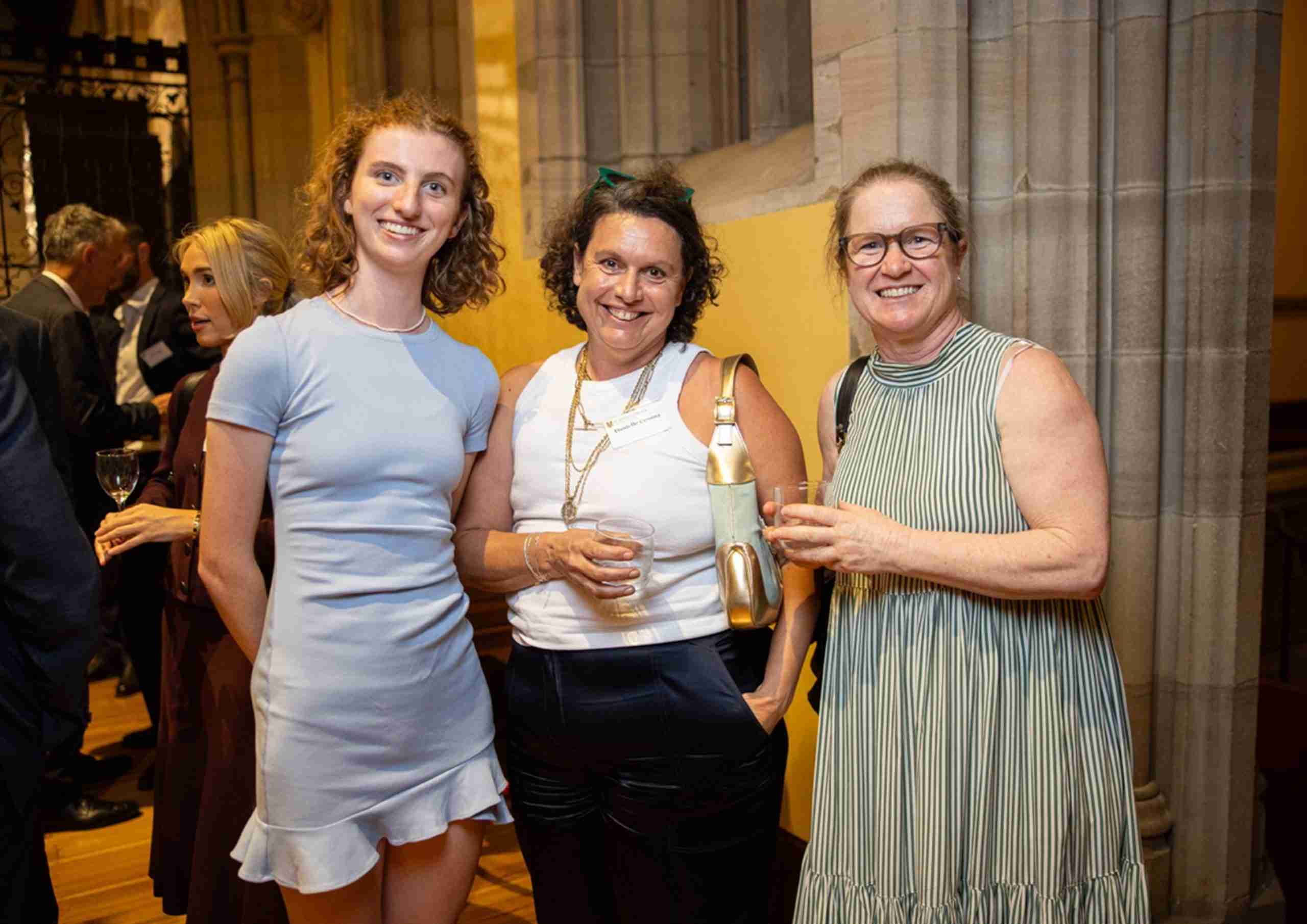
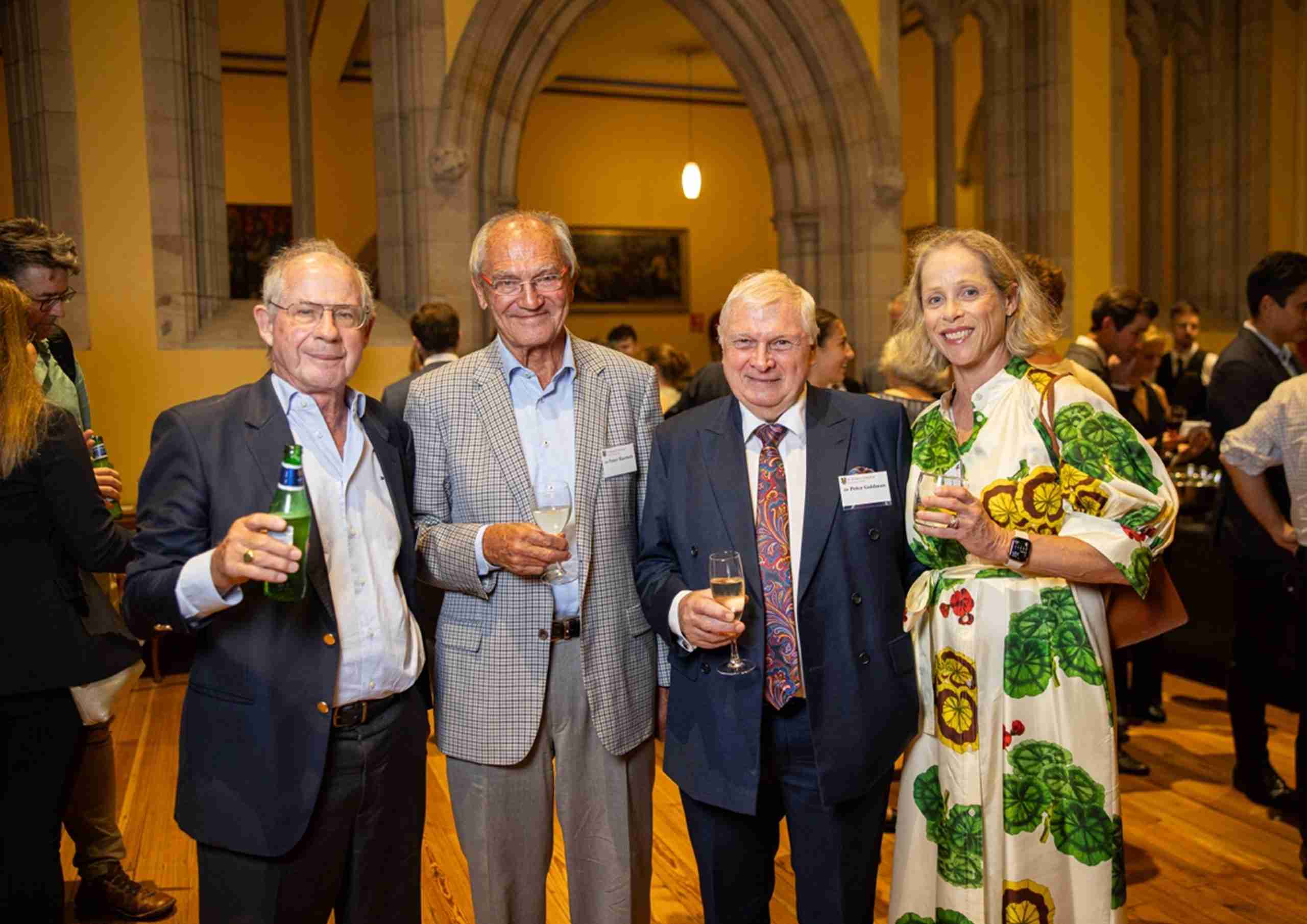
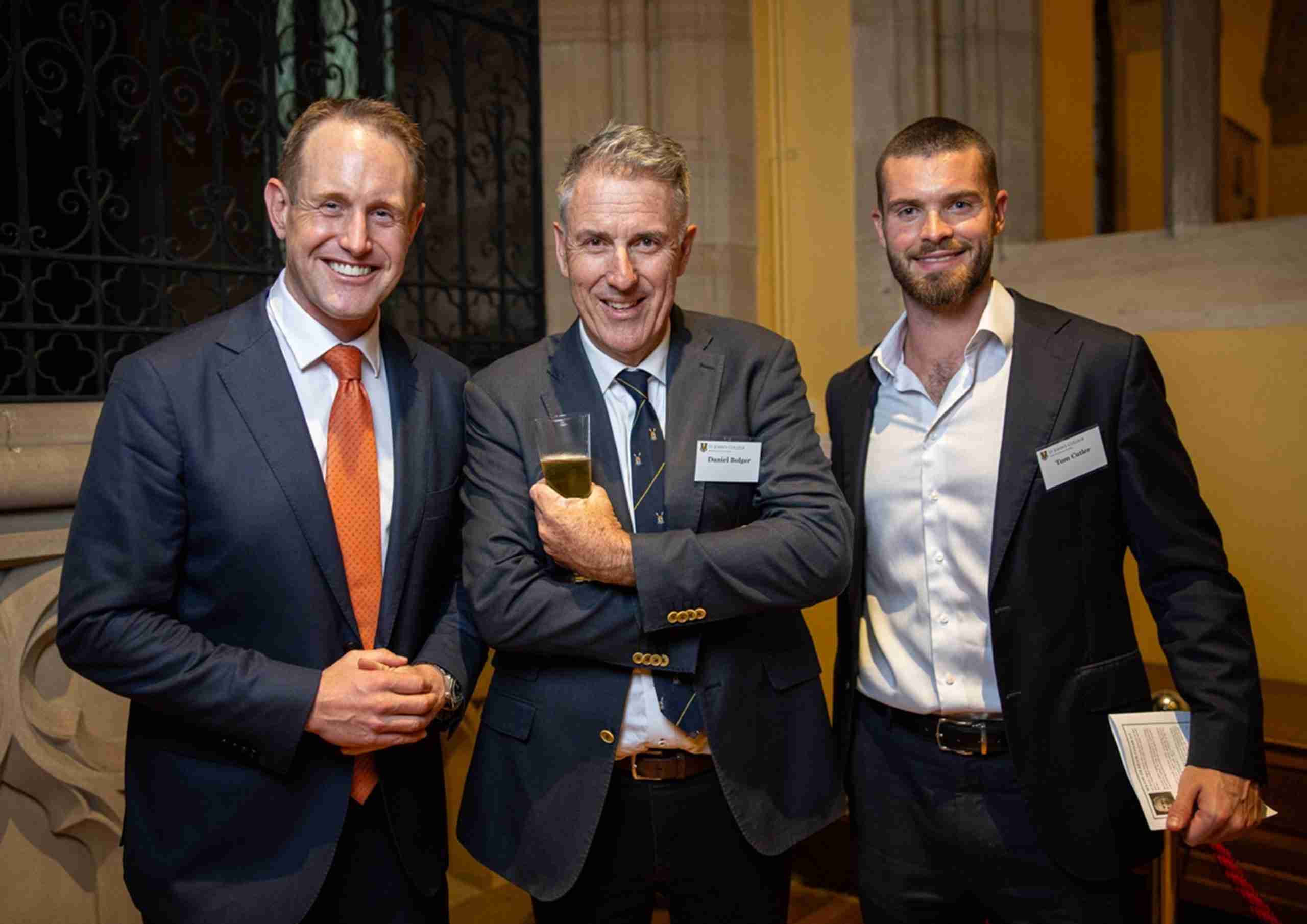
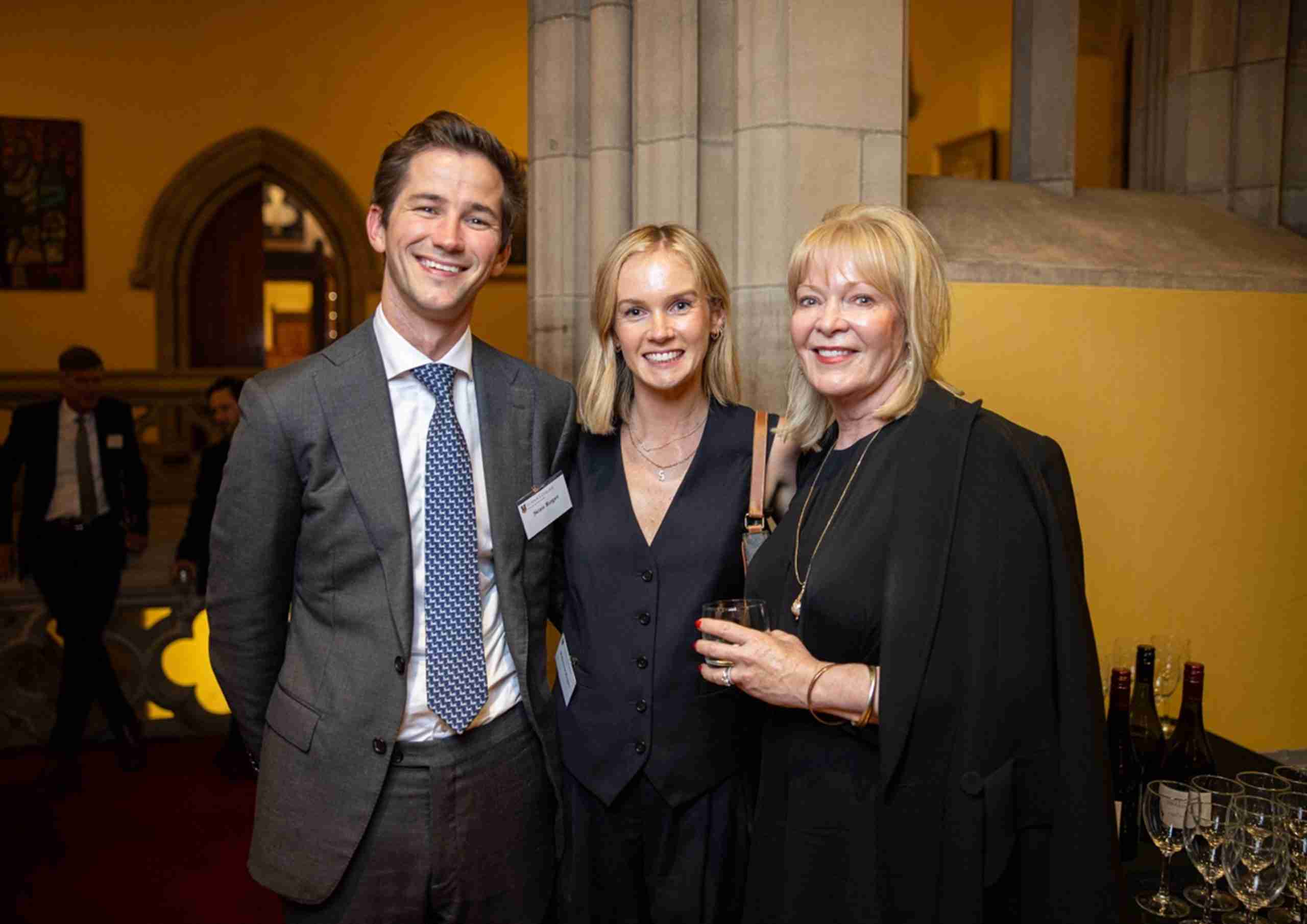
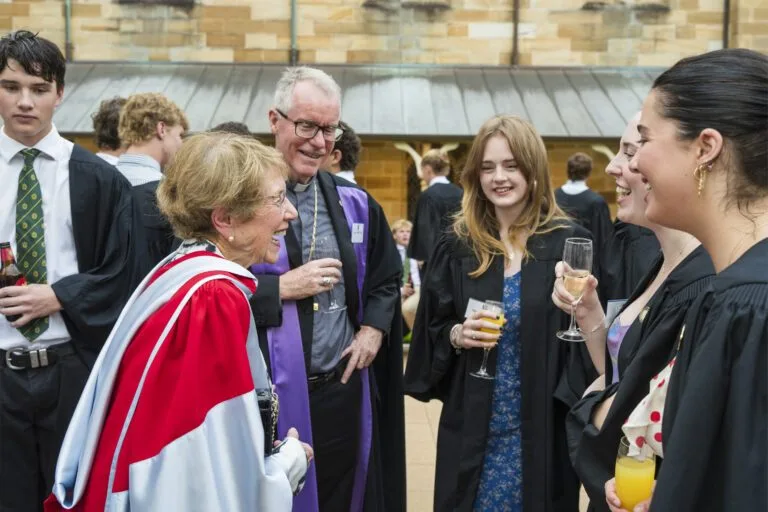
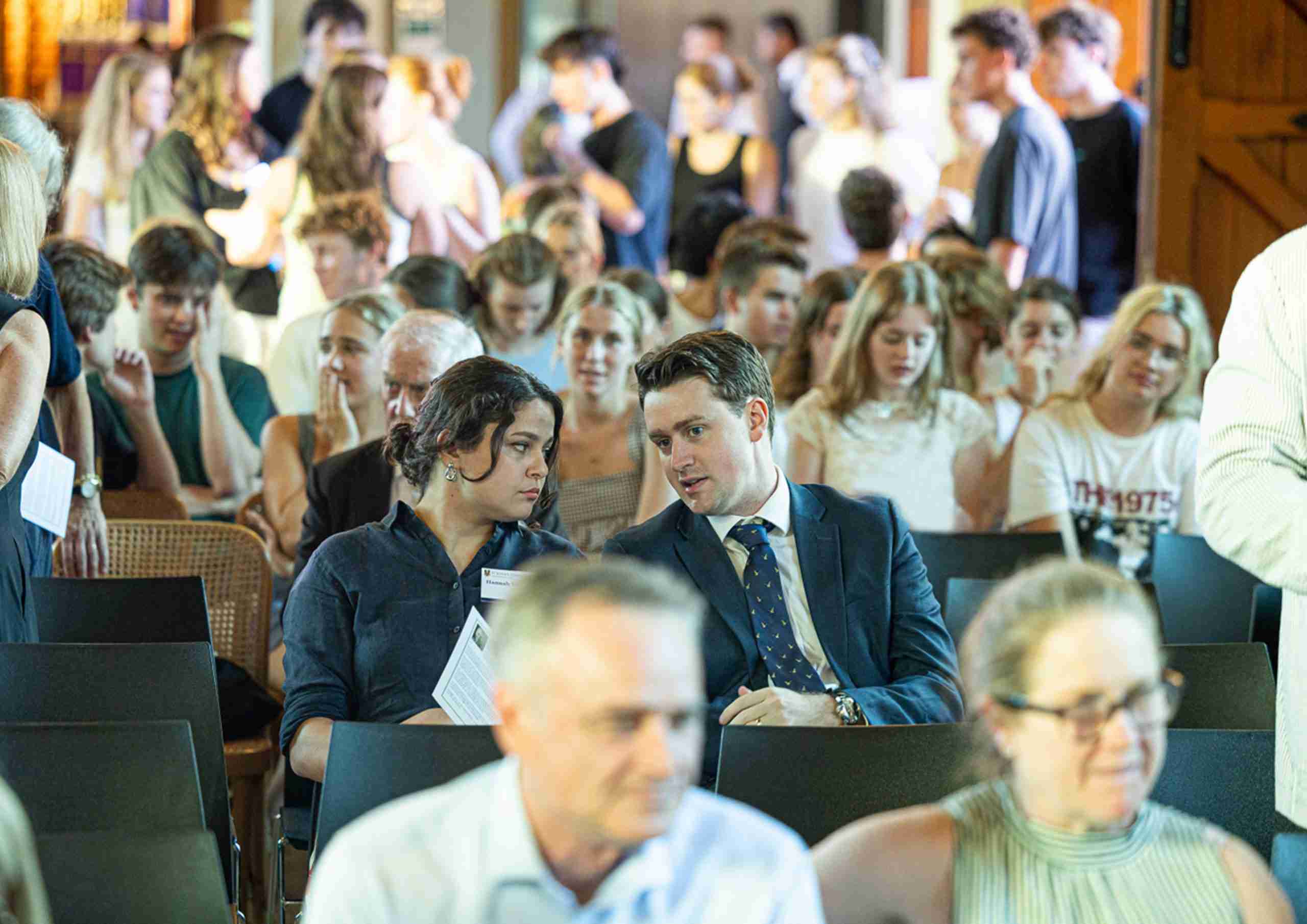
Alongside over 150 guests and students, attendees of the lecture included:
• The Hon Peter McGauran: Former Member of the House of Representatives for the federal seat of Gippsland and former Cabinet Minister during the Howard Government. • Dr Kathryn Austin: Vice President of the Australian Medical Association. • Prof Charbel Sandroussi: Head of Surgery, Royal Prince Alfred Hospital. • Associate Professor Michael Cooper: representing St Vincent’s Hospital. • Dr Alastair Morris: Head of Division at Royal North Shore Hospital. • Professor Rathan Subramaniam: Dean, Faculty of Medicine, Nursing, Midwifery, and Health Sciences at the University of Notre Dame Australia. • Professor Margaret Somerville: Professor of Bioethics at the University of Notre Dame Australia. • Professor Christine Bennett: Deputy Vice-Chancellor at the University of Notre Dame. • Mr Daniel Bolger: President of the Old Ignatians' Union. • Mr Paul Dellow: President of the St John’s Alumni Association. • Mr John Coorey: Chairman of St John’s College Council. • Professor Bernadette Tobin AO GCSG: Former Chair of College Council and Director of the Plunkett Centre for Ethics at St Vincent's Hospital.
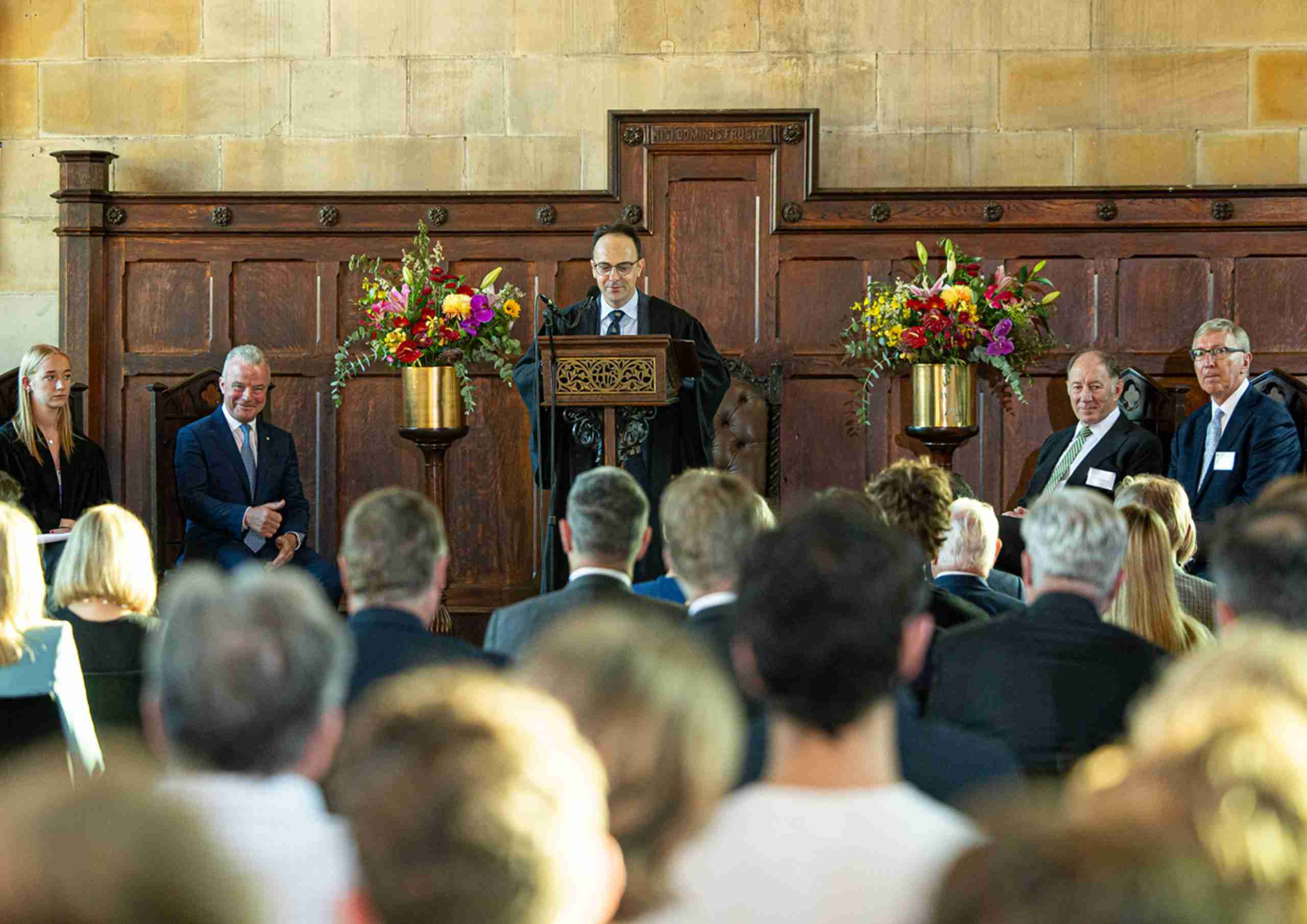
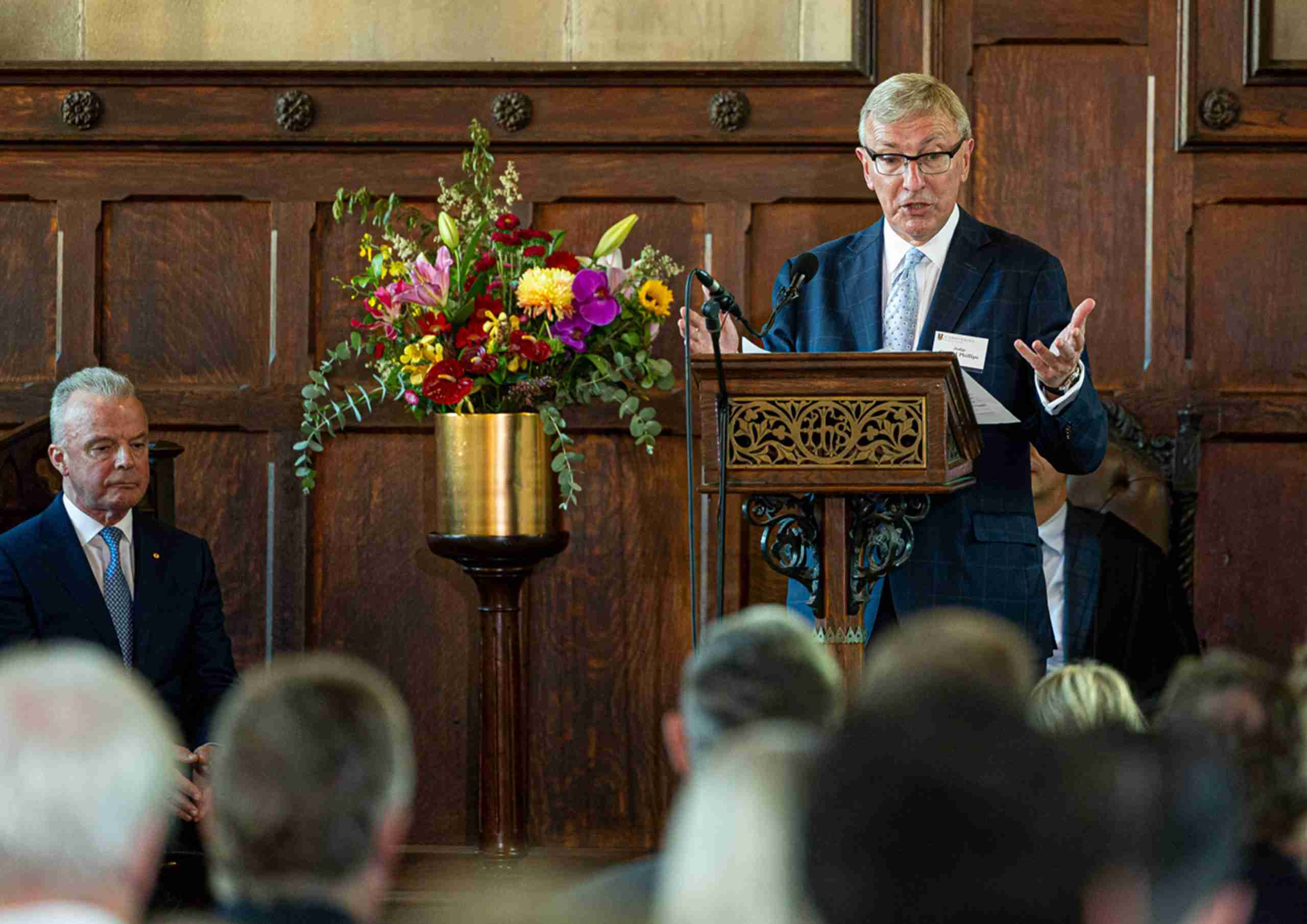
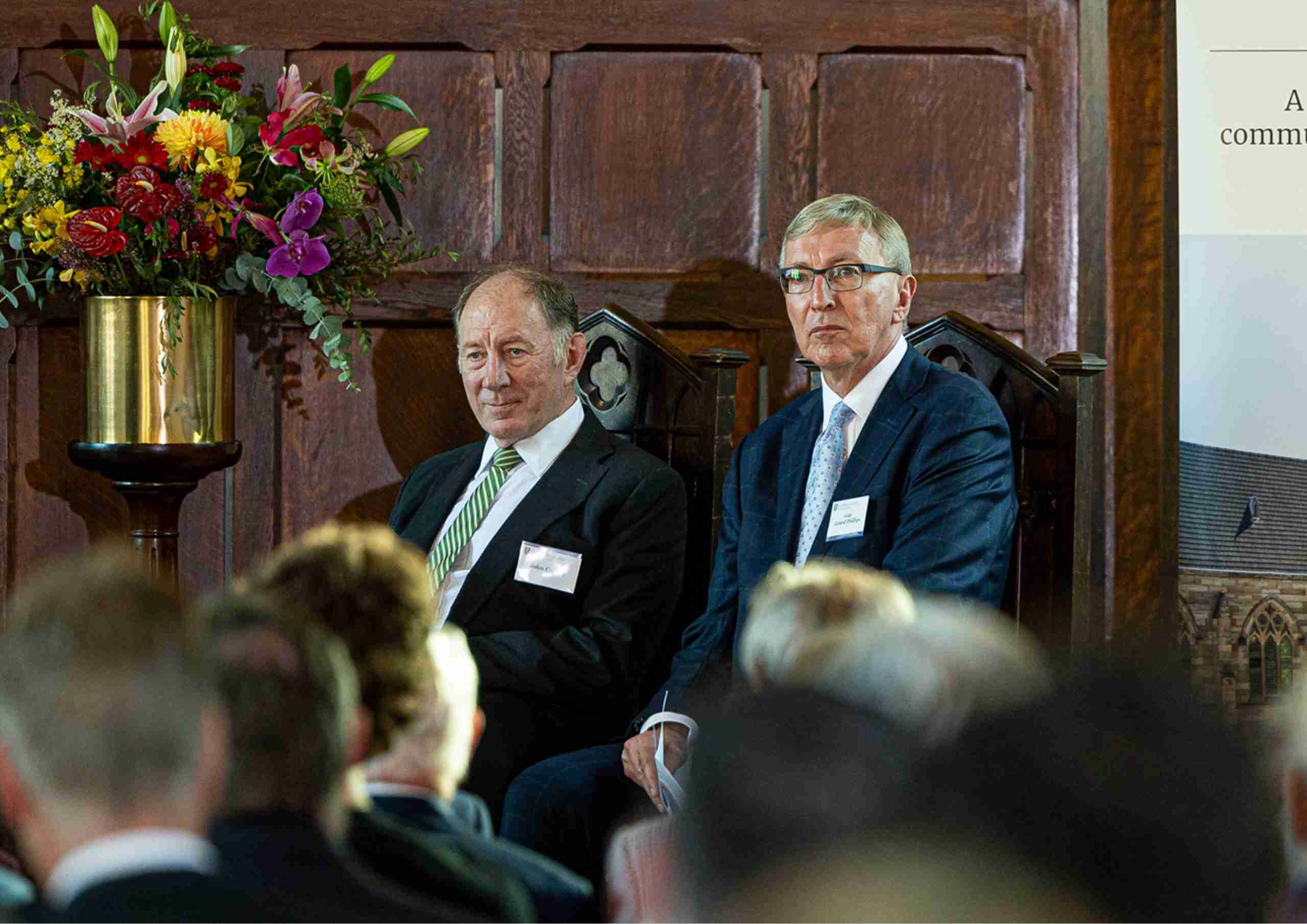
Dr Nelson was introduced by College alumnus and Member of Council, Judge Gerard Phillips, the President of the Personal Injury Commission of NSW. Judge Phillips reminded us that Dr Nelson’s contributions extend beyond politics and military affairs, as he has made significant strides in the business world, serving as President of Boeing Australia, New Zealand, and the South Pacific since 2020.
During his delivery, Dr Nelson, spoke on the topic of success:
When I was President of the Australian Medical Association, some young doctors asked me to their annual conference. They asked me if I would speak to them about the topic of success, and I remember standing before them, and I said to them, 'When you work it out can you let me know?' But now at the age of 65 screaming to 70, I’ve got a better idea. There are five things that I have concluded are essential to success:
The first is to have an open mind. You have to have a mind that is open to new ideas to the unfamiliar, to people that are different, to be willing to have your inherent biases and prejudices tested.
The second is to nurture and protect the inner integrity of your own intellect, your ability to think, to formulate ideas and express them in ways that will challenge and change the attitudes of a society that wields so slowly and painfully to it. It’s critically important to not fall into the trap of seeing the world through a straw, to focus only on your own field of endeavour. It’s essential to be interested in, and interesting to, the rest of the world to understand the context of the world in which you live and you work.
The third key to success is character – it transcends everything in life; rank, power, money, influence, looks, intellect. It’s far more important. You will see people that have immense abilities: intellectual, physical, and other attributes, who never achieve their full potential by virtues of failures of character.
The Jesuits who educated me in Adelaide, South Australia, in my final two years of secondary education set me up for my life. They said to me that there are four values that are essential for success in building character. The first is commitment – you have to consistently apply yourself to whatever it is in which you believe and the people in the course to which you have committed. That you do not ever give up. The endurance, if you like, are personified by Kevin Fagan…The second is conscious – every single decision, I was told, has a question immediately. Beneath it: what is the right thing to do? I remember Fr David Strong, saying 'no such thing as big or small decisions; every decision', he said, 'has consequences for you, and for others' and in leadership throughout my life, I have seen it repeatedly. People who are obsessing over a particular decision. The third the Jesuits said is compassion, which means literally to share another person’s pain. One of the mistakes people make in life is believing that if they know what a person thinks, then that’s the most important, but what’s far more important is understanding how people think. Once you have worked out who and what is shaping a person’s world that is when you are more than halfway there to changing their outlook. The fourth is courage. Nothing, not a single thing in life of value is achieved without taking a risk. Courage is hard to define; you know it when you see it, when you feel, it’s a spirit that challenges doubt, imposes will, protects your integrity, advances values, then ultimately allows you to break through fear.
The fourth key to success is what Graeme Davison describes in "The Use and Abuse of Australian History”, as being imbued with the imaginative capacity to see the world through the eyes of others. Almost all of life’s suffering, misery and pain emerges from people who are unwilling or unable to see the world through the eyes of another human being, and so the same can be said of nation states.
The fifth thing that I have concluded which is essential to success in life, is the humanity that you show as you go through your life.
Dr Nelson then provided a powerful testament to the power of the human capacity for forgiveness, by providing first-hand recounts from men and women of former military service, and their path to making peace with the suffering they experienced:
There was a book in my office entitled “Getting On With it – Reflections of the Second 30th Battalion Association” which sat in my briefcase for about five weeks before I read it on a plane from Perth to Sydney. There were two things that stood out. One of the reflections was this: 'You might want to hate the Japanese for what they did. You might never be able to forget but I can’t hate another human being. I can’t. I need to forgive and it’s the hardest test of all, but it’s worth it because I believe in myself and I value it'. Another said, 'I suppose compassion means being prepared to listen to other people’s point of view and respecting those views'.
Dr Nelson ended his speech with a quote from Major Dr Kevin Fagan himself:
It gave me a great understanding of men. And a great appreciation of the ordinary things of life: bread and butter, a bit of jam on your toast in the mornings, a glass of beer when you're thirsty. And the value of human relations. You know, when it comes to the end, the only thing that really matters are the people whom you love and who love you.” For we are one and we are free. And to Kevin Fagan we thank you.
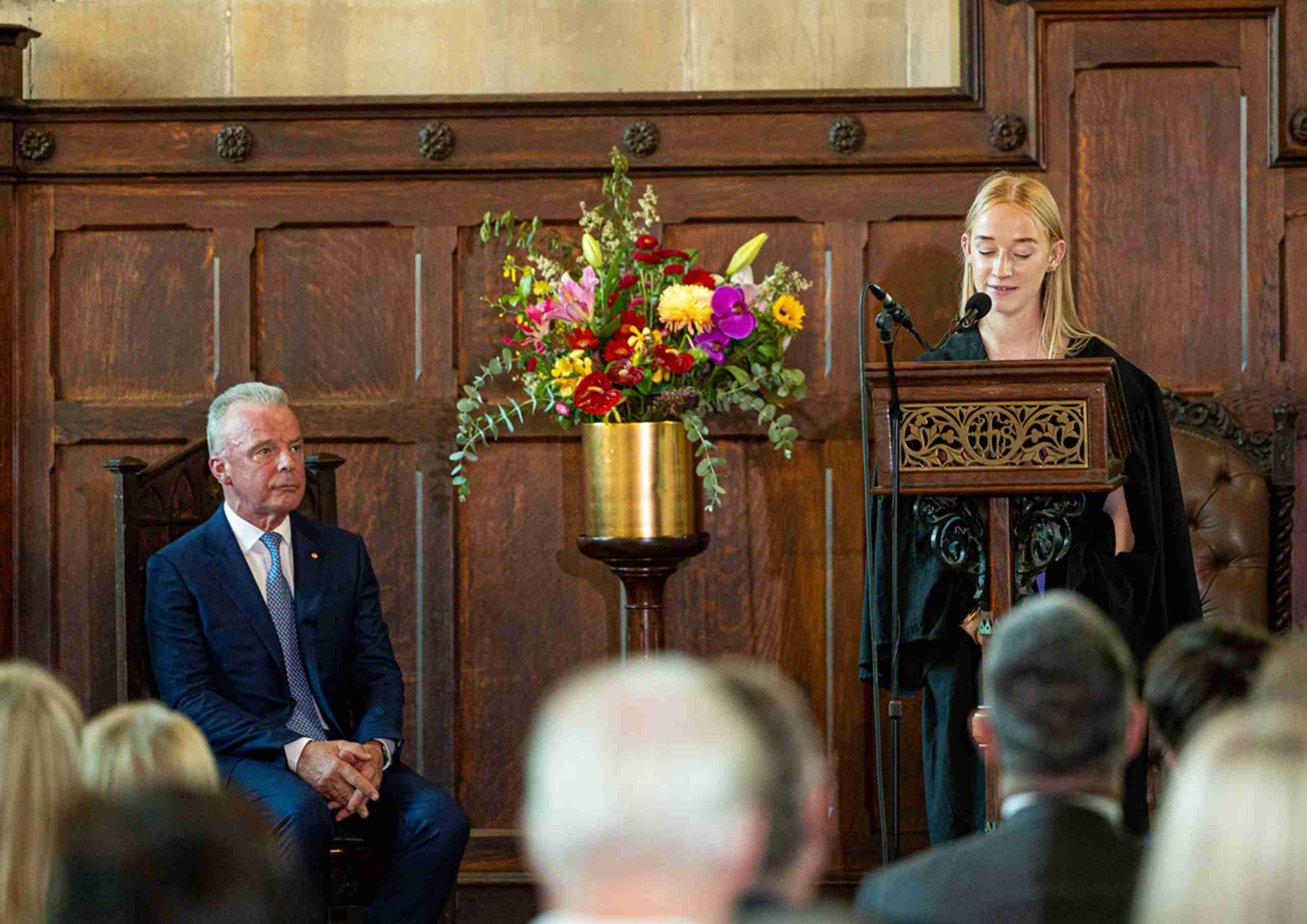
A vote of thanks was then given by Third Year Student, Eliza Carolan:
While my personal recollections of your days of political leadership are limited by my birth year of 2004, I have diligently researched your contributions and the insights shared by our Rector in preparation for tonight's talk. From what I have gleaned, I can confidently say that you mirror the remarkable qualities of Dr Kevin Fagan. Your dedicated service to our nation, whether through politics, medicine, or your involvement with the War Memorial, speaks volumes about your character and commitment.
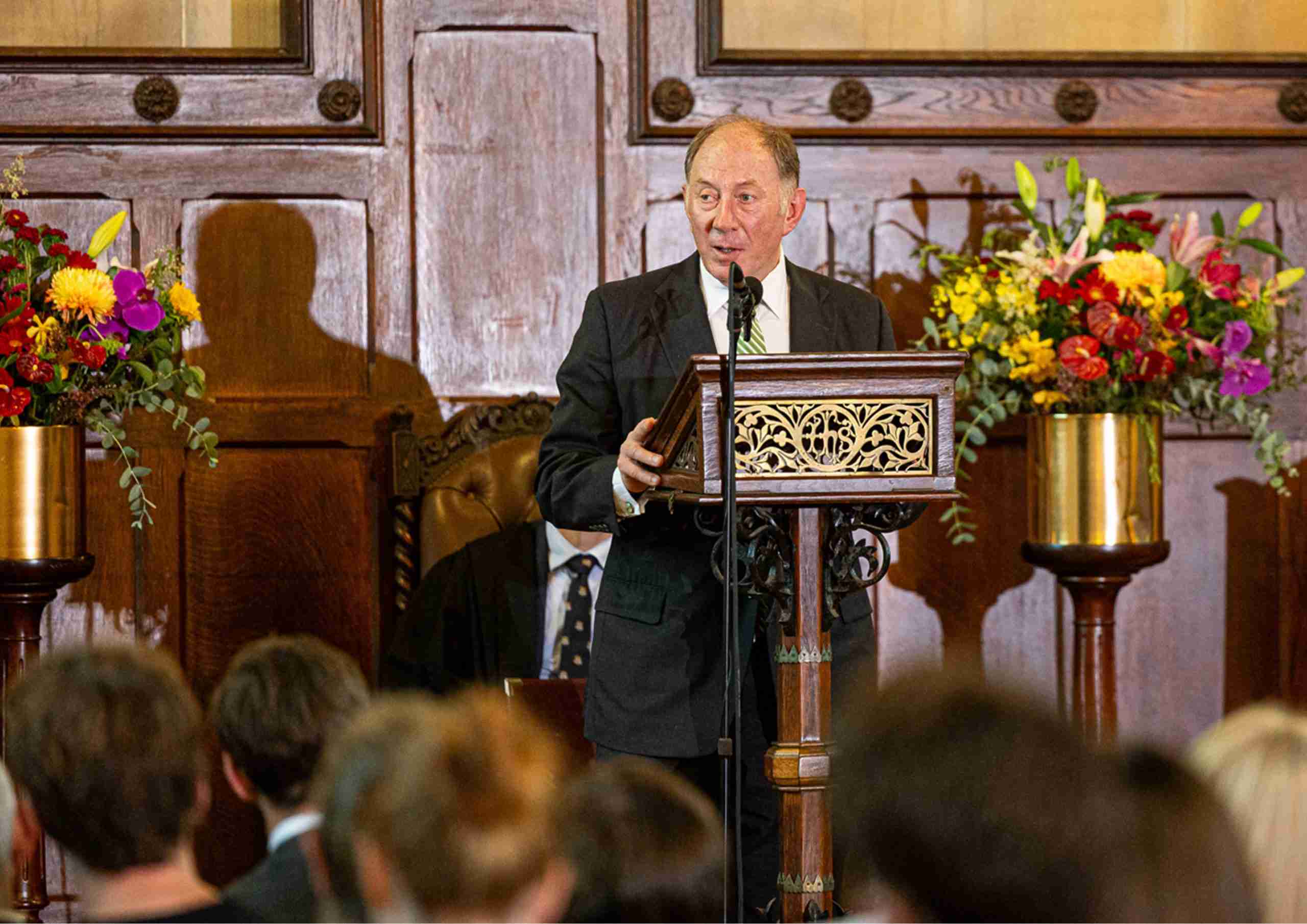
A Q&A session was then chaired by Council Chairman, Mr John Coorey.
Dr Nelson’s speech can be found by clicking on this link.
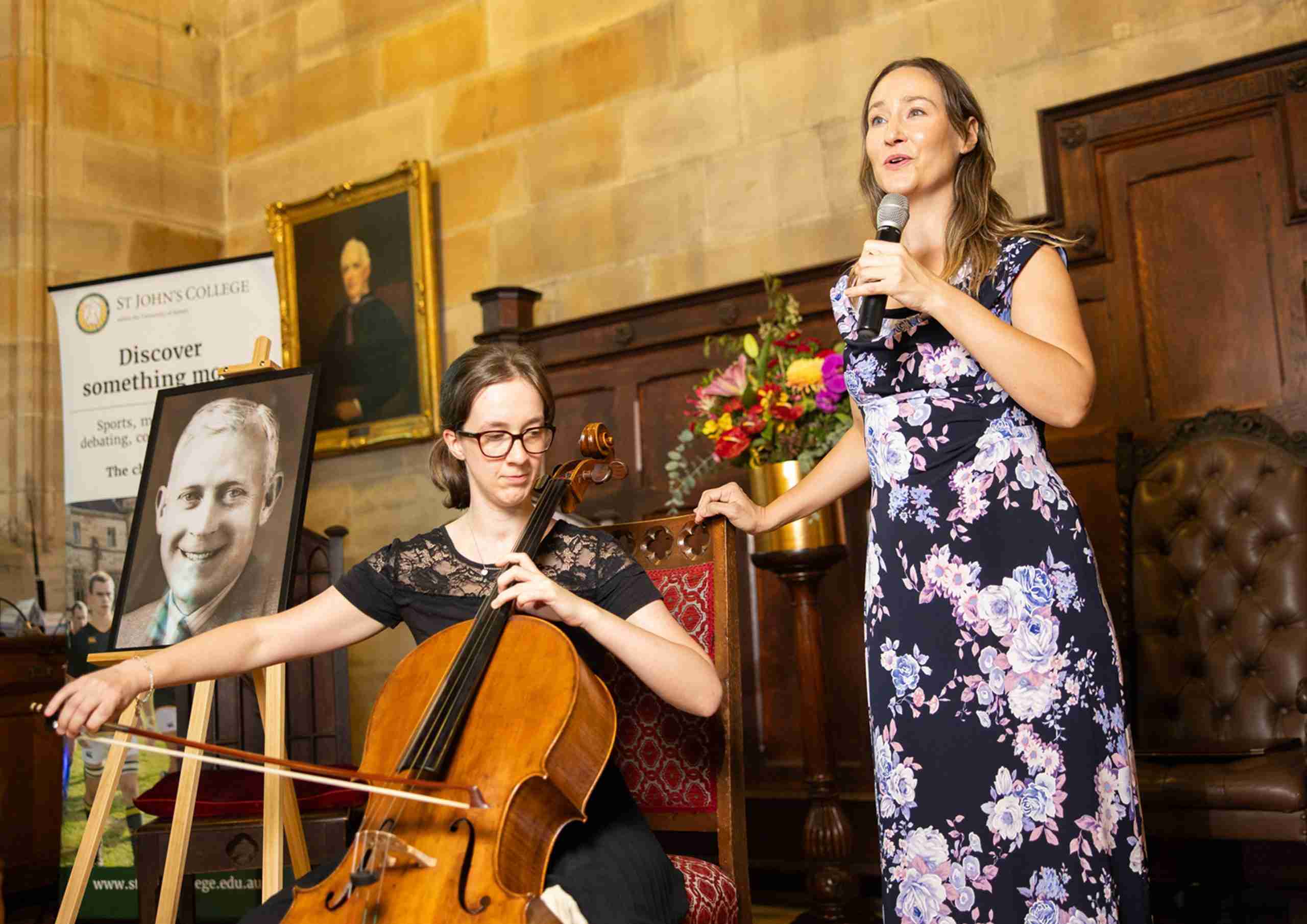
As is customary at St John’s, these enlightening speeches were complemented by a musical interlude featuring "You'll Never Walk Alone", performed by our Dean of Students (Music), Mary-Jean O’Doherty, accompanied on cello by Susanna Keogh.
All were invited to supper to end a magnificent night in the history of the College. Thanks again to the Honourable Dr Brendan Nelson AO.